Echo Cross Resonance gate error budgeting on a superconducting quantum processor
2026-01-30 11:03
588 浏览
High fidelity quantum operations are key to enabling fault-tolerant quantum computation. Superconducting quantum processors have demonstrated high-fidelity operations, but on larger
devices there is commonly a broad distribution of qualities, with the low-performing tail affecting near-term performance and applications. Here we present an error budgeting procedure
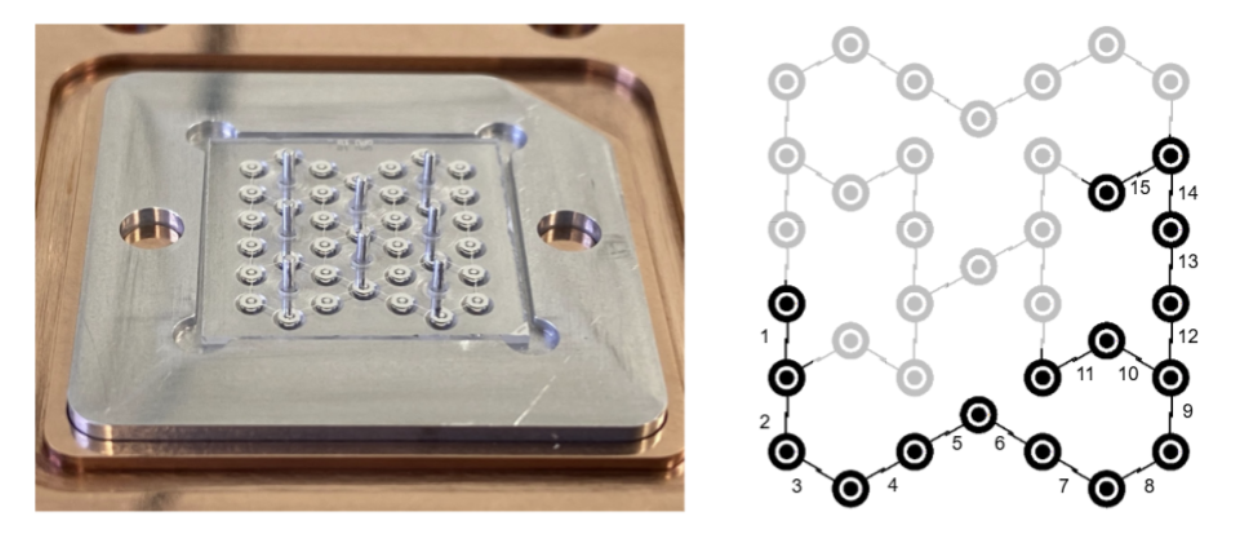
for the native two-qubit operation on a 32-qubit superconducting-qubit-based quantum computer, the OQC Toshiko gen-1 system. We estimate the prevalence of different forms of error
such as coherent error and control qubit leakage, then apply error suppression strategies based on the most significant sources of error, making use of pulse-shaping and additional
compensating gates. These techniques require no additional hardware overhead and little additional calibration, making them suitable for routine adoption. An average reduction of 3.7x in
error rate for two qubit operations is shown across a chain of 16 qubits, with the median error rate improving from 4.6
The largest improvements are seen on previously under-performing qubit pairs, demonstrating the importance of practical error suppression in reducing the low-performing tail of gate
qualities and achieving consistently good performance across a device.
Link to the article is here.
